
Business
Music analytics is becoming a data layer for AI agents
Viberate and Soundcharts opened structured music data to conversational assistants. The shift could change A&R and marketing without generating a single note.
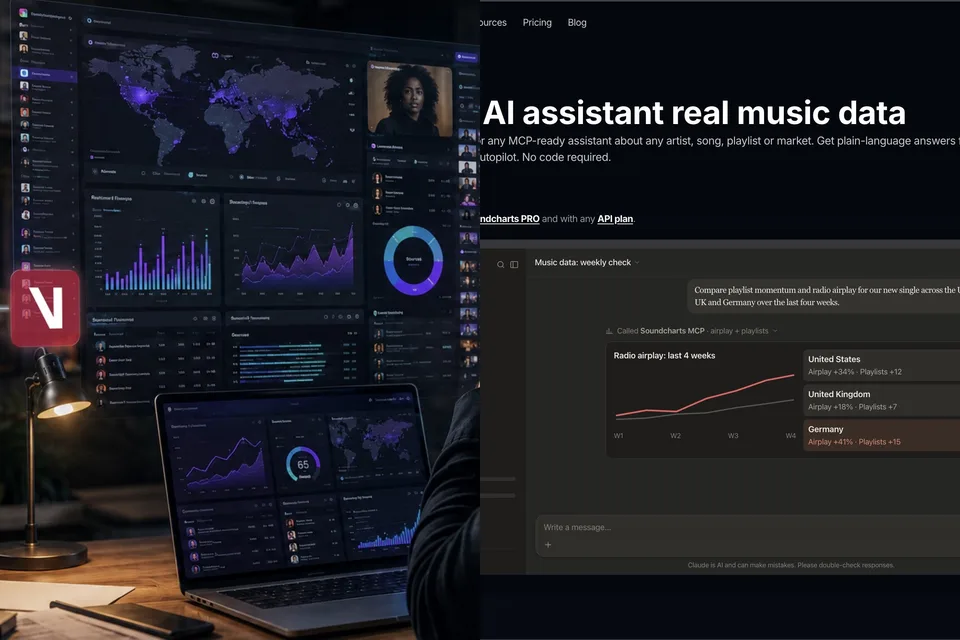
Viberate and Soundcharts both used July to make the same strategic move: let AI assistants query their music-industry data in ordinary language through Model Context Protocol servers.
Viberate launched its connector on 1 July for questions about artists, tracks, audiences, festivals and markets. Soundcharts described a similar three-part product model later in the month: dashboards for repeated monitoring, APIs for production systems, and conversational access for open-ended questions.
This is a different AI-music economy from song generation. An A&R team can ask for fast-rising unsigned artists, a manager can compare markets, and a promoter can explore lineup fit without learning a complex analytics interface.
The question becomes the interface
Natural-language access lowers the cost of exploring data, but it also delegates part of the analysis to a model. A fluent answer can still misunderstand the request, choose the wrong comparison or turn correlation into advice.
Soundcharts founder David Weiszfeld described the useful boundary clearly: let AI handle retrieval and assembly while humans retain judgment, relationships and timing. The distinction matters because a music-business recommendation is not true merely because every number inside it came from a reputable database.
The durable product opportunity is therefore not “chat instead of dashboards.” It is traceable answers that preserve the source, time range and query logic, with a path from conversational exploration into a repeatable report or API workflow.