
Products
Roland and Neutone put user-trained AI models into a live effects box
Project LYDIA is a hardware prototype for building and performing with neural audio models without a laptop on stage.
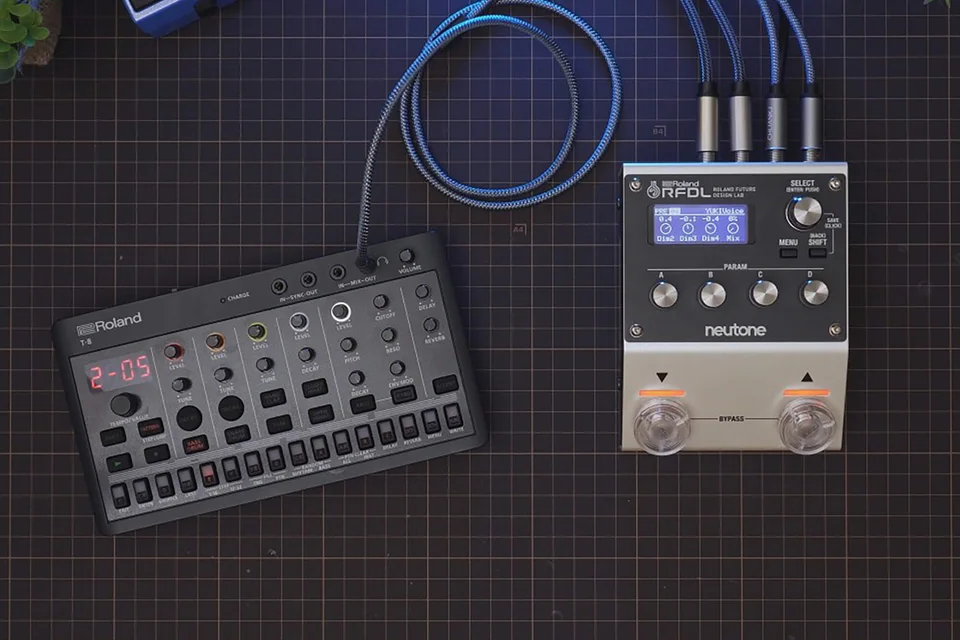
Roland and Tokyo-based Neutone are prototyping a hardware instrument that lets musicians build neural audio models from their own sound and use them as real-time effects.
Project LYDIA combines a Neutone pedal with Roland's compact AIRA hardware. Rather than generating a finished track from text, the system learns transformations from audio examples and makes those models playable with physical controls. Neutone's earlier Morpho software explored similar “neural sampling” inside a plug-in; the prototype moves that idea into a stage-ready box.
A model can be an instrument, not a service
Most AI music products hide both the model and the training material behind a web interface. LYDIA points in the opposite direction: the musician supplies a small, purpose-built dataset, shapes the behavior and performs the result in real time.
That design does not automatically eliminate rights questions — users still need permission for the material they train on — but it makes provenance much easier to understand. A personal model built from a player's own recordings is a different object from a commercial generator trained on an undisclosed catalogue.
The project is still a prototype, with no announced retail release or final specification. Its importance is conceptual: it shows AI audio entering the same physical space as pedals, samplers and synthesizers, where latency, touch and repeatable control matter more than prompt fluency.