
Artists & culture
R² makes AI part of the live instrument, not a finished track
Reinier Zonneveld’s festival project puts a model trained on his own archive inside an unpredictable stage system.
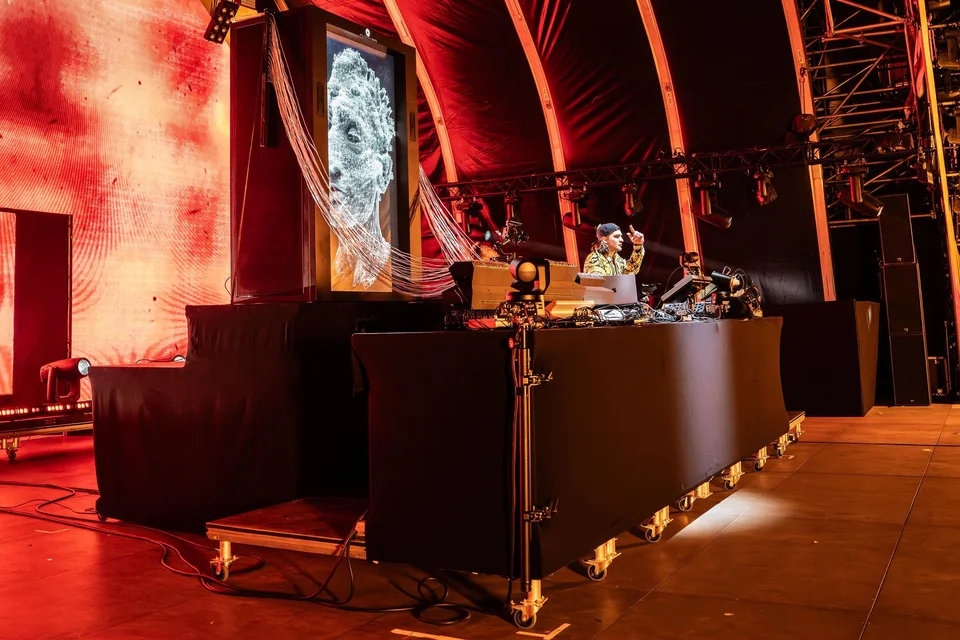
Reinier Zonneveld’s R² Festival returned to Spaarnwoude on 15 August. The project is built around a different use of music AI: not generating a release from a prompt, but letting a model respond inside a live techno performance.
Zonneveld’s team trained R² on his own archive of recordings and sets. One model listens to what he is playing and continues from that point; its MIDI output can trigger synthesizers and drum machines on stage. The performer can prompt the system, mix its channel and reject what does not work.
The uncertainty is visible
Most AI-music products hide generation behind a progress indicator and present the result as a finished song. R² turns the uncertain part into the performance. The audience sees a human musician reacting to a system that may introduce a groove, melody or build-up he did not plan.
It is also a useful rights model because the training boundary is unusually clear: Zonneveld says the system learned from his own music. That does not make every live-AI project ethical or interesting, but it shows a more legible relationship between data, authorship, control and risk than a general-purpose generator can offer.