
Products
Six Weeks in Suno Studio: From Stubborn MIDI Files to Shared Libraries
MIDI fidelity, shared song libraries and a chat assistant: six weeks of updates push Suno toward the work that follows a first generation.
AI-assisted
AI assisted with research and writing; the article was revised under editorial direction and checked against the linked sources.
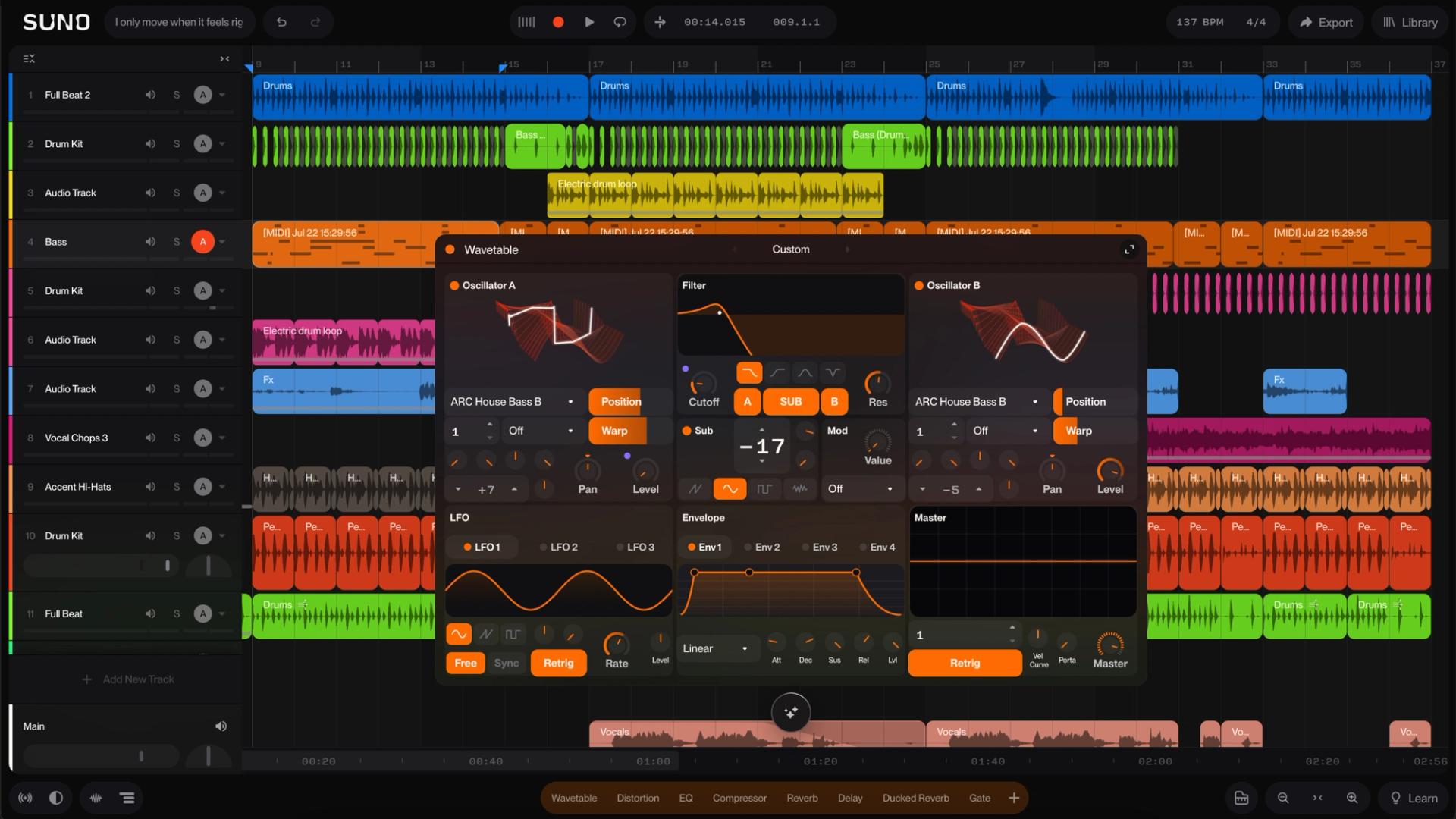
Read Suno’s autumn release notes in sequence and a clear pattern emerges. A slot machine that turns a sentence into a finished pop song is a novelty; a studio tool has to respect the chords a musician already wrote and the people they work with. Across six weeks in September and October, Suno shipped three updates aimed at what happens after the first prompt.
17 September: Holding onto the chord progression
The first complaint from working producers who test generative audio tools is almost always the same: you feed the system a carefully voiced MIDI progression, and the model wanders off into its own melody. In its 17 September Studio update, Suno described an overhauled MIDI-to-audio engine built for faster conversion, better musical context awareness and closer fidelity to the source MIDI. The same update introduced audio stem generation from a MIDI clip and the ability to generate MIDI parts through chat.
15 October: Letting a second person into the project
A month later, Suno announced shared libraries of songs for invited collaborators on Pro and Premier plans, plus shared custom models for Premier users. The release note describes access to a shared library, not simultaneous editing of one Studio timeline.
29 October: Cleaning up the mixer through chat
In a 29 October blog post, the company outlined how its Studio Chat assistant handles mix-prep chores—naming unlabeled tracks, adjusting channel levels and adding effects by text instruction. The post reads as a walkthrough of capabilities now live in the interface rather than a single-day launch of every listed command.
All three updates remain developer descriptions until tested against a demanding session. The real measure for a producer will be whether the MIDI-to-audio pass preserves their musical decisions, and how shared-library and custom-model permissions behave in an actual collaboration.