
Rights & policy
A Small Tag Below the Cover Art: YouTube Music Begins Labeling AI Tracks
YouTube Music is rolling out a player-level disclosure, using partner metadata and detection to tell listeners how a track was made.
AI-assisted
AI assisted with research and writing; the article was revised under editorial direction and checked against the linked sources.
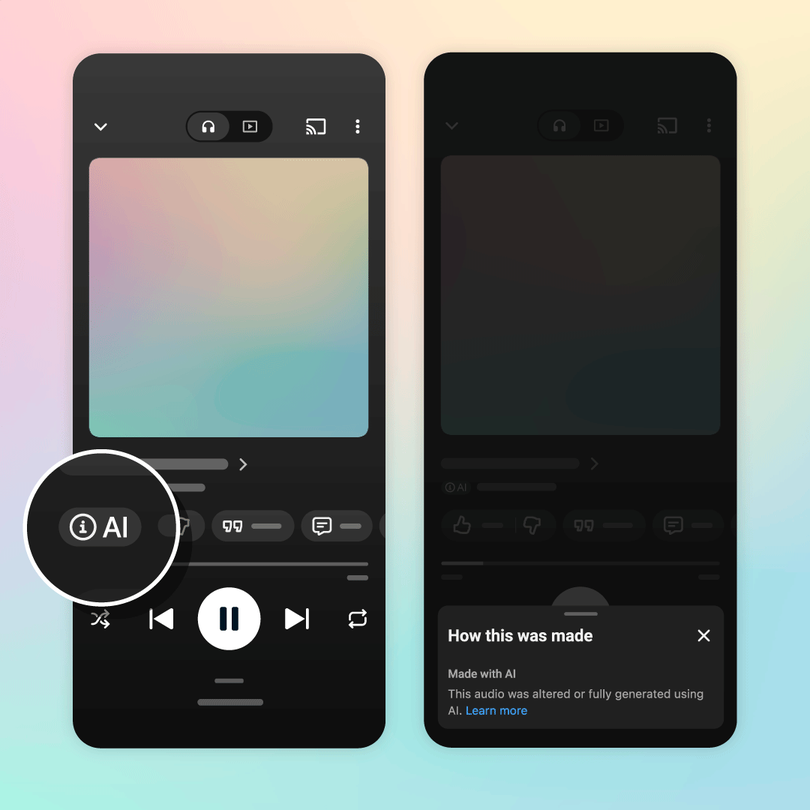
As the rollout reaches a listener, the change appears on YouTube Music’s player screen below the album art. Alongside the track information sits a small label noting that the music was made primarily with generative AI. Tap the notice, and a short explanation opens on screen.
On 14 October, YouTube announced that it had begun rolling out these player-level disclosures, a move covered the same day by Digital Music News. As a baseline example of what triggers the badge, YouTube points to recordings where both the musical composition and the vocals were created by a model.
To decide which songs carry the tag, YouTube says it combines two streams of information: disclosures supplied by music partners during delivery and the platform’s own detection systems. Expanding the labels to the main YouTube video platform is listed as a subsequent step.
Nothing in the 14 October announcement bans AI-generated uploads or strips them from the catalog. Instead, the label changes the social contract of the player screen. Listeners are told how the record was made while the chorus is still playing, shifting the pressure onto distributors and artists to understand how partner metadata is reported—and how a musician can contest a badge if an automated detector misreads a human performance.