
Rights & policy
Munich court rules for GEMA in its copyright case against Suno
The first-instance decision says Suno needed licenses for the GEMA works examined by the court. Suno has indicated that it may appeal.
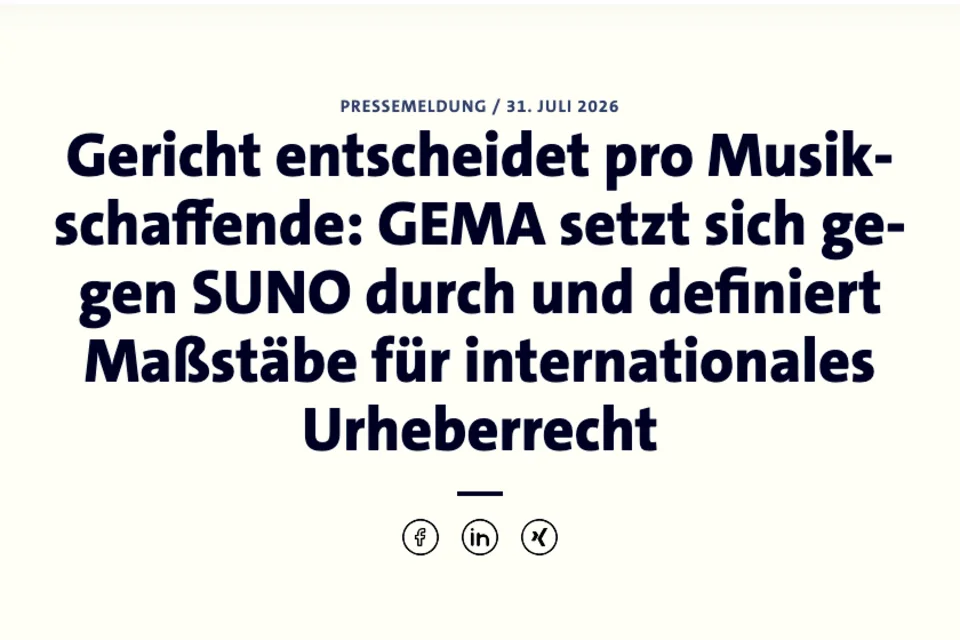
The Munich Regional Court ruled for GEMA in its case against Suno on 31 July. According to GEMA and the court notice, the dispute covered both the use of protected songs in model development and outputs that reproduced material from the examined works.
The court found that licensing was required for the uses at issue and that Suno could be liable under German law as the service operated in Europe. GEMA also says the judgment addressed training conducted in the United States through the court's analysis of US copyright law.
What the decision does — and does not — establish
This is a first-instance ruling about a defined set of works and claims. It is not a global judgment that every AI-generated song infringes copyright, and it does not decide whether a particular user's original prompt-based output is lawful.
It is nevertheless significant because the court did not accept the idea that model training and output reproduction were automatically outside licensing obligations. The judgment gives other European rightsholders a concrete decision to cite when negotiating or litigating over music-generation systems.
Suno disputes the characterization of its technology and has said it is evaluating its options, including an appeal. Until the appellate position is known, the precise precedential weight remains unsettled. The immediate factual point is narrower: GEMA won at first instance, and Suno faces licensing and damages consequences for the uses the court examined.