
Artists & culture
King Willonius wrote the joke before AI started singing
BBL Drizzy began with a comedian's premise and lyrics, then passed through more than 100 Udio versions and a human decision about which one carried the joke.
AI-assisted
AI assisted with research organisation, structure and drafting; publication requires a human editor to check every claim against the linked sources.
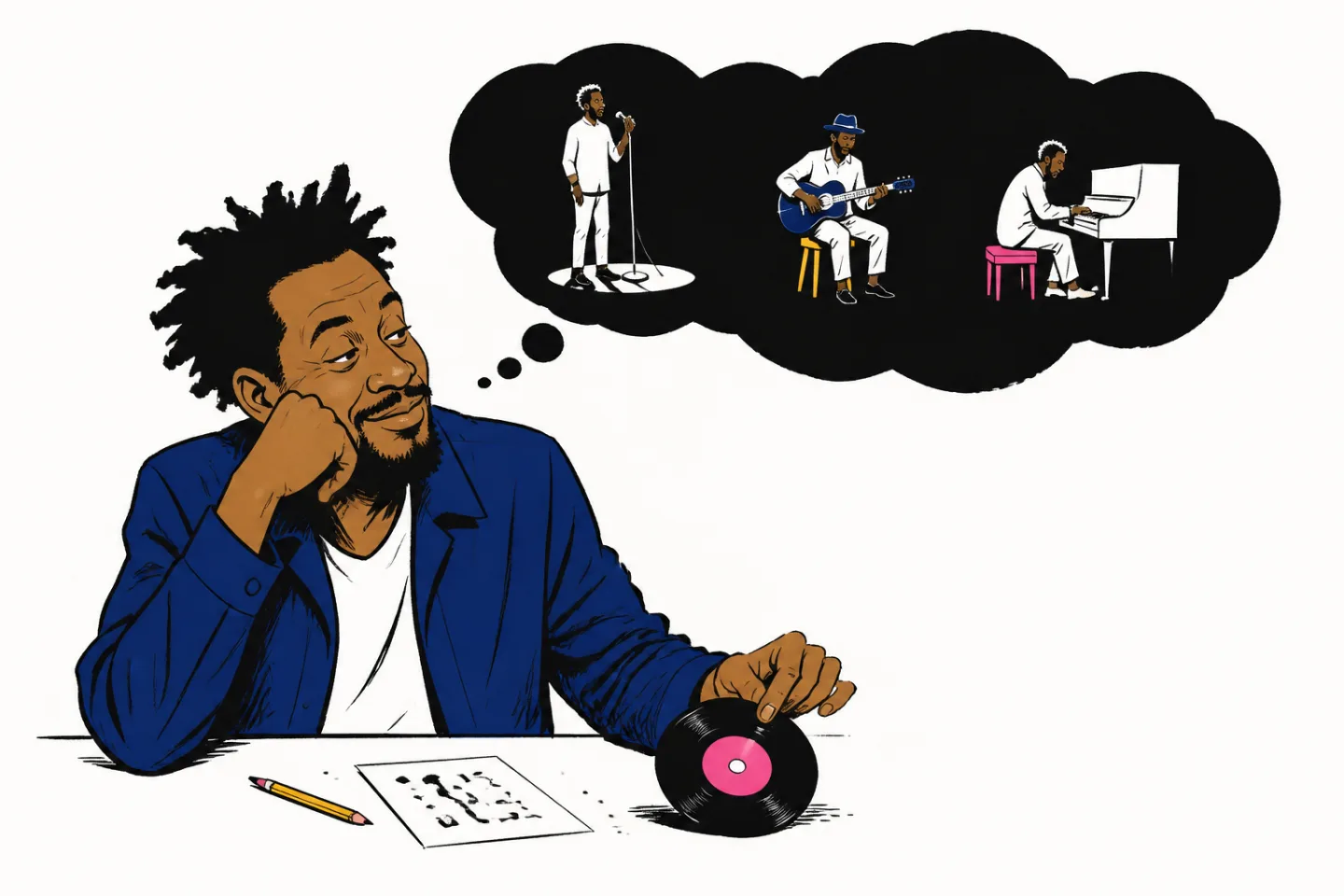
“BBL Drizzy” is easy to flatten into a prompt-and-output anecdote. The record is more useful when read as a sequence of decisions.
King Willonius is the stage name of comedian and writer Will Hatcher. He did not arrive at the track as a first-time user asking a system to invent a joke for him. TIME reported that he had spent months experimenting with generative tools after the 2023 writers' strike, sometimes for more than eight hours a day. His earlier work already joined comedy and music. The software entered an existing practice.
The premise was the first instrument
Willonius has said that he wrote the lyrics himself. The idea drew on the public feud around Drake and Rick Ross and on a phrase that was already becoming a joke online. In his Creativity Squared interview, he described the system as a collaborator for the rest of the musical construction—not as the author of the premise.
That distinction matters. A premise establishes the target, tone and social timing of a comedy record before a voice, chord or drum sound exists. If coverage starts at the Udio prompt, it begins after a significant part of the authorship has already happened.
Abundance made selection more important
Willonius did not stop at a single generation. He made more than 100 versions in styles that included gospel, yacht rock and K-pop. The version released as “BBL Drizzy” used the Motown-like treatment that carried the joke beyond the original experiment.
Generating that many plausible alternatives changes the shape of the work. Scarcity moves away from producing an audible file and toward deciding what deserves to leave the folder. The important human action becomes comparative: hearing where the cadence lands, whether the fake period style strengthens the satire and which performance sounds memorable rather than merely possible.
The HOT 97 interview gives the apparent contradiction its proper scale. Willonius said the first creation took roughly 10 to 15 minutes and that this was only his second AI song. But the short interface session sat on top of years in comedy, months of tool practice and a culturally specific premise. “Fast” describes one operation, not the full creative process.
A better authorship ledger
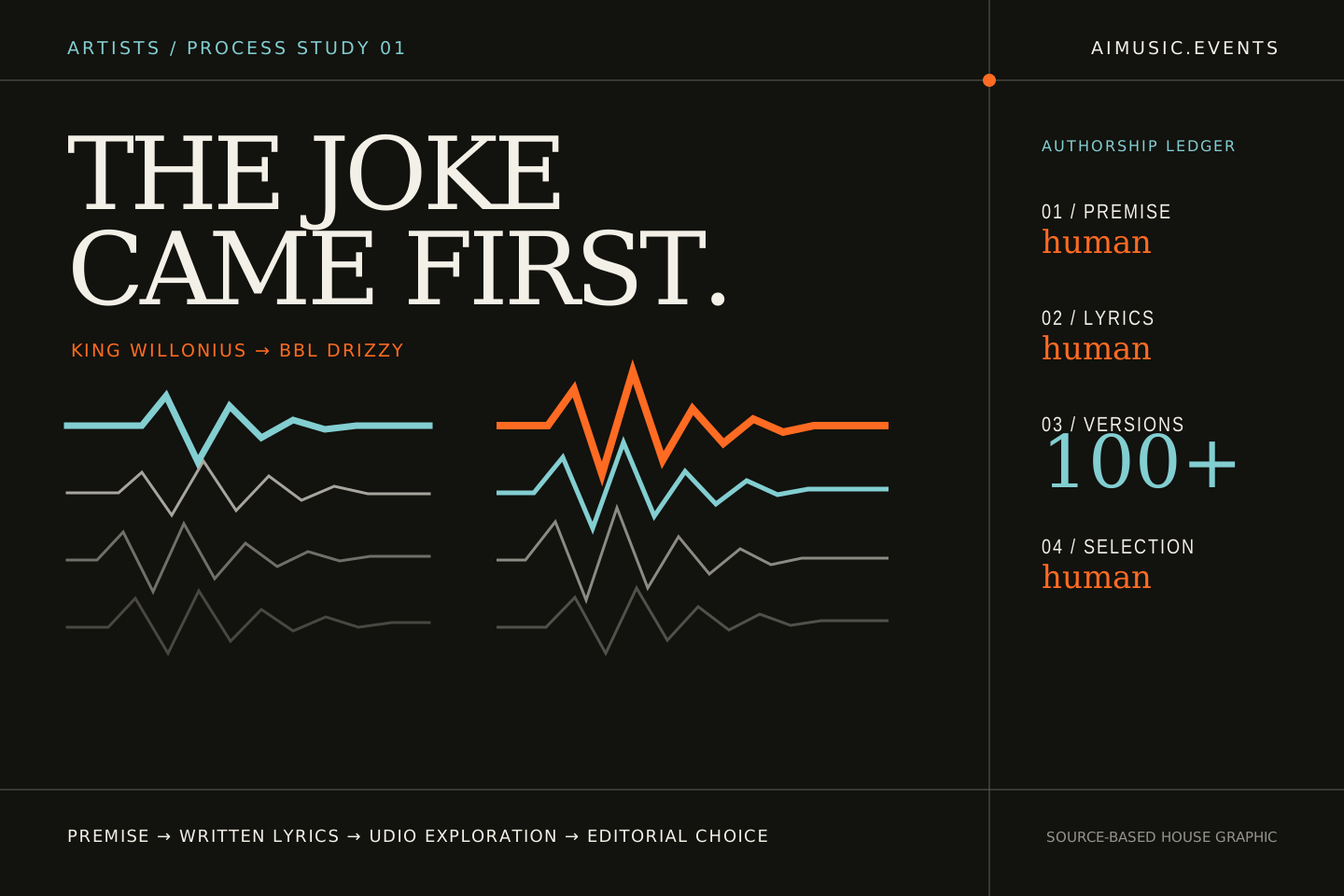
| Stage | What is documented |
|---|---|
| Premise and comic target | Developed by King Willonius |
| Lyrics | Written by King Willonius |
| Musical and vocal exploration | Generated with Udio across more than 100 versions |
| Final choice and release | Selected and released by King Willonius |
| Full technical provenance | Not publicly documented in the cited accounts |
This ledger does not make the generator incidental. Without it, this particular abundance of voices and period treatments would not exist. It also does not turn an available tool into the sole creative agent. The work sits in the relationship between a prior human practice, generated variation and human editorial judgment.
The official Apple Music release lists a one-minute single released on 18 April 2024. That small object is the residue of a much larger search. The material worth documenting is not only the file that survived. It is the process that made one file worth keeping.