
Artists & culture
The voice is virtual. The songwriter is not.
Xania Monet's songs begin as Telisha Jones's poems and lyrics, then pass through a generative production pipeline that creates the voice and music.
AI-assisted
AI assisted with research organisation, structure and drafting; publication requires a human editor to check every claim against the linked sources.

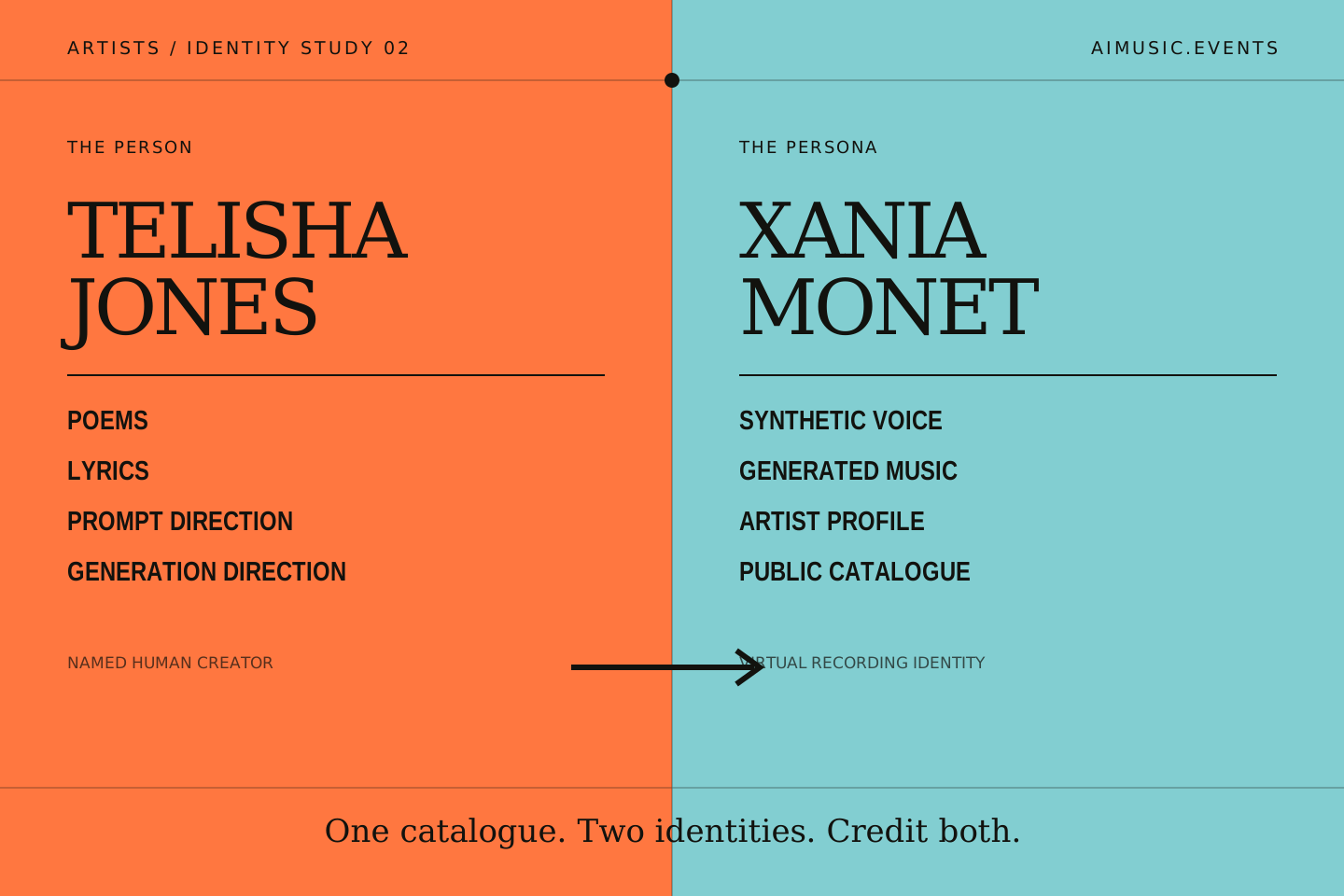
Xania Monet is a recording identity, but not a human being waiting behind the artist photograph. Telisha “Nikki” Jones is the person who writes and directs the project. Useful coverage has to keep both names visible.
In a CBS Mornings interview, Jones described Xania as an extension of herself. She also drew a clear line around one contribution: the lyrics, she said, are entirely hers and begin as poems based on her own experiences and those of people close to her.
That makes the project neither a conventional singer-songwriter identity nor an anonymous machine output. It is a human-authored writing practice presented through a synthetic performer.
The poem exists before the voice
Jones described a repeatable workflow. She chooses a poem from her writing, enters the lyrics into a generative music application and directs musical properties through prompts: tempo, R&B style, a soulful female voice, guitar and drum choices. The system produces the vocal and music heard under the released persona. The cited interview does not publish how many outputs Jones auditioned before release.
The sequence matters because “AI artist” compresses several roles into one label. The subject matter and words can come from a named person even when no human singer performed the released vocal. At the same time, writing the lyrics does not make Jones the literal vocalist. The Xania Monet identity performs that public role on streaming services.
One catalogue, two identities
| Identity | Documented role |
|---|---|
| Telisha “Nikki” Jones | Poems, lyrics and prompt direction |
| Xania Monet | Virtual artist name and credited synthetic performer |
| Generative system | Candidate music, arrangement and synthetic vocal |
The separation is not merely philosophical. Spotify stores Xania Monet as an artist profile with its own catalogue and audience. Apple Music lists “How Was I Supposed to Know?” under that performer name. Luminate's new AI-identification announcement uses the song as a named example and labels both the artist and track as AI-generated.
The artist identity therefore does real institutional work. It groups releases, receives follows, accumulates listening history and becomes the name fans encounter. Jones remains the source of the writing and direction behind it.
Disclosure should not force a false choice
Calling Xania Monet “fake” erases the human writing that Jones publicly claims. Calling the project simply a Telisha Jones performance erases the synthetic voice and generated production. Both descriptions lose information.
A useful credit needs to preserve the division:
- lyrics and originating poems by Telisha Jones;
- musical and vocal generation directed through prompts;
- synthetic performance released as Xania Monet;
- model version, candidate count and full generation record not publicly documented in the cited accounts.
The unresolved details matter. The interview describes how Jones works, but it is not a prompt log or a model card for every recording. The release metadata confirms the public artist identity, not every private production step.
The point of separating person from persona is not to decide which one is “real.” It is to let readers see where experience, writing, performance, software and public identity actually sit.