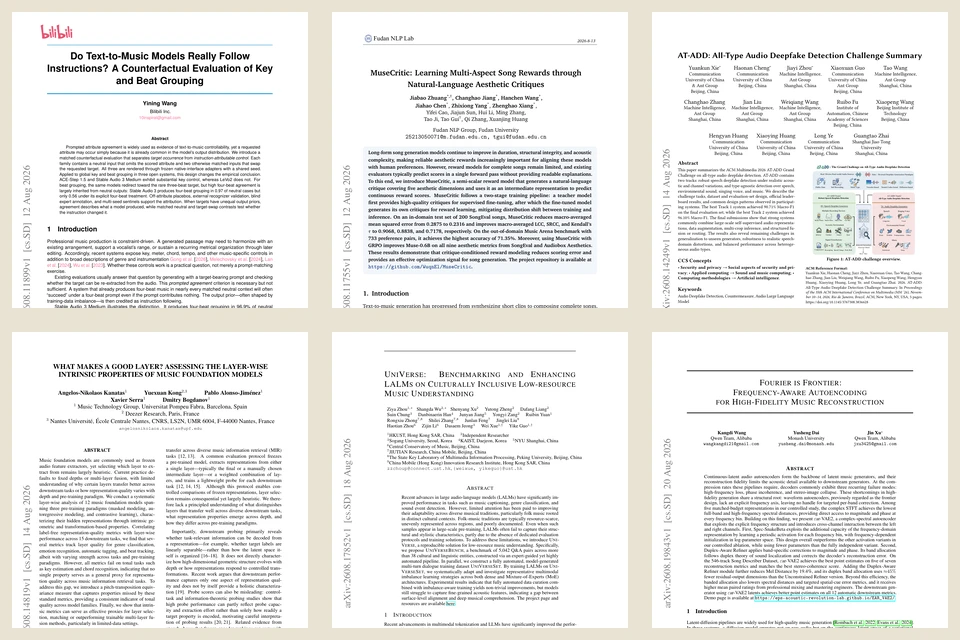
Six more August papers show where music models still fail
New work tests instruction following, song rewards, cultural understanding, audio fidelity, deepfake detection and the hidden layers used for music analysis.

Important releases, creative work, rights decisions and industry shifts — explained clearly and linked to the original sources.
New work tests instruction following, song rewards, cultural understanding, audio fidelity, deepfake detection and the hidden layers used for music analysis.
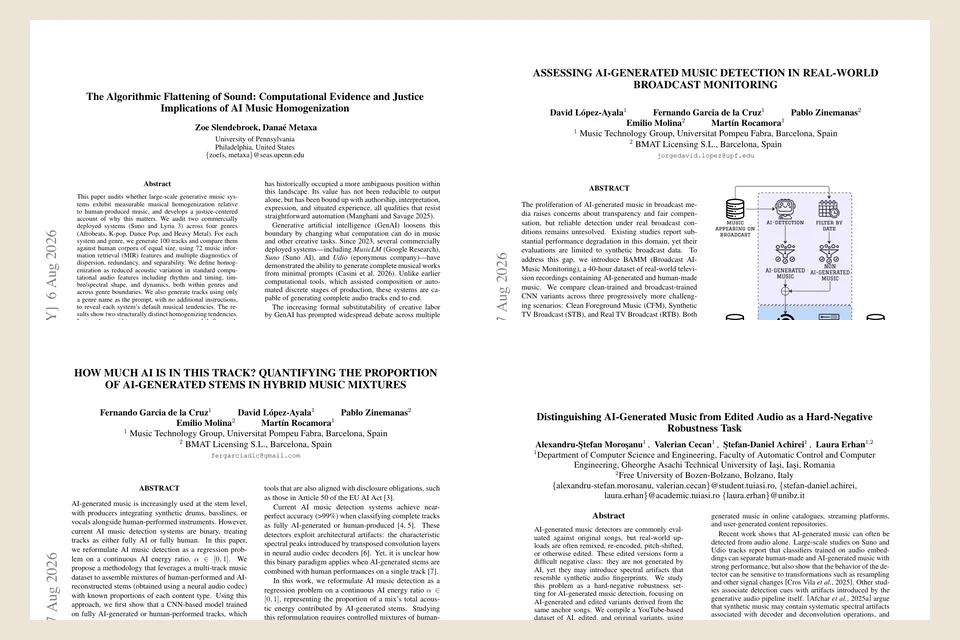
New studies examine musical sameness, broadcast detection, mixed AI stems and edited-audio false positives. Together they argue against one universal detector score.
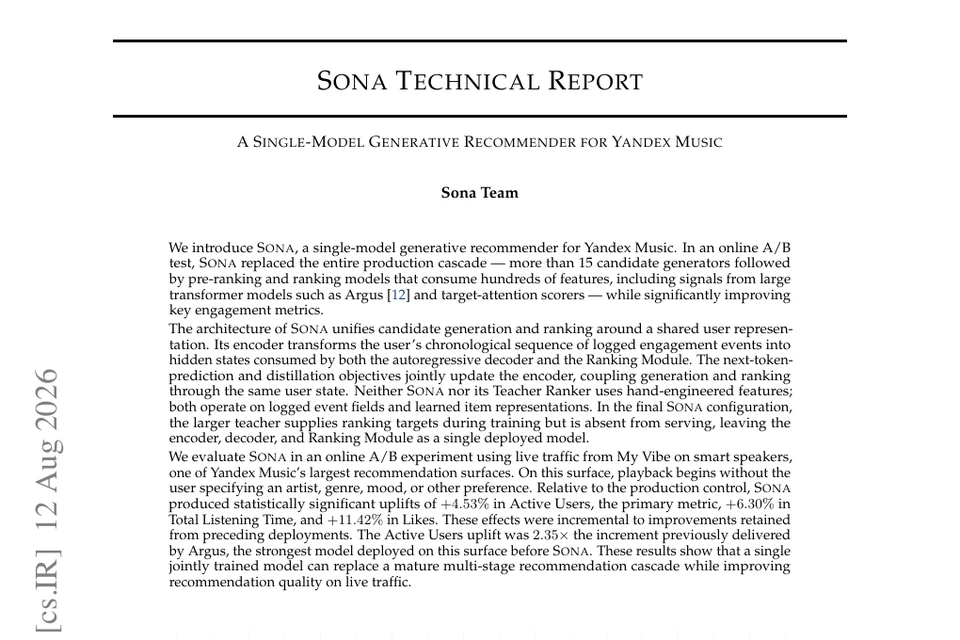
One generative recommendation model beat the existing My Vibe stack in a smart-speaker test, according to a new technical report.
The new song product arrives beside an Alibaba Token Foundry technical report built around global planning, local token generation and full-song audio rendering. The public paper does not itself name HappyShrimp.

New research treats the platform as neither a simple success story nor a copy of Western music AI.
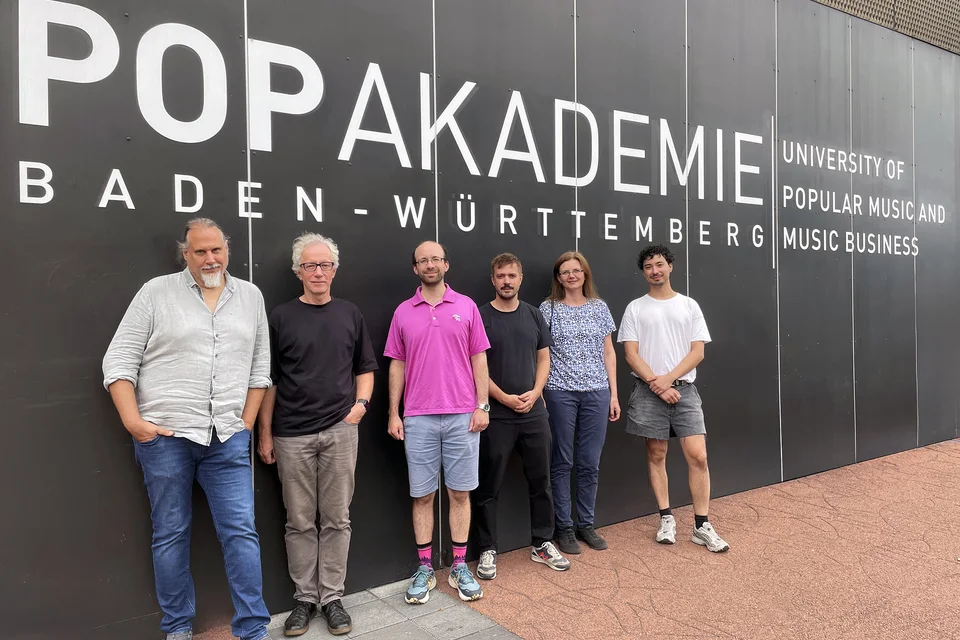
Fraunhofer IDMT and Popakademie Baden-Württemberg will study production, distribution, licensing, culture and policy through 2036.
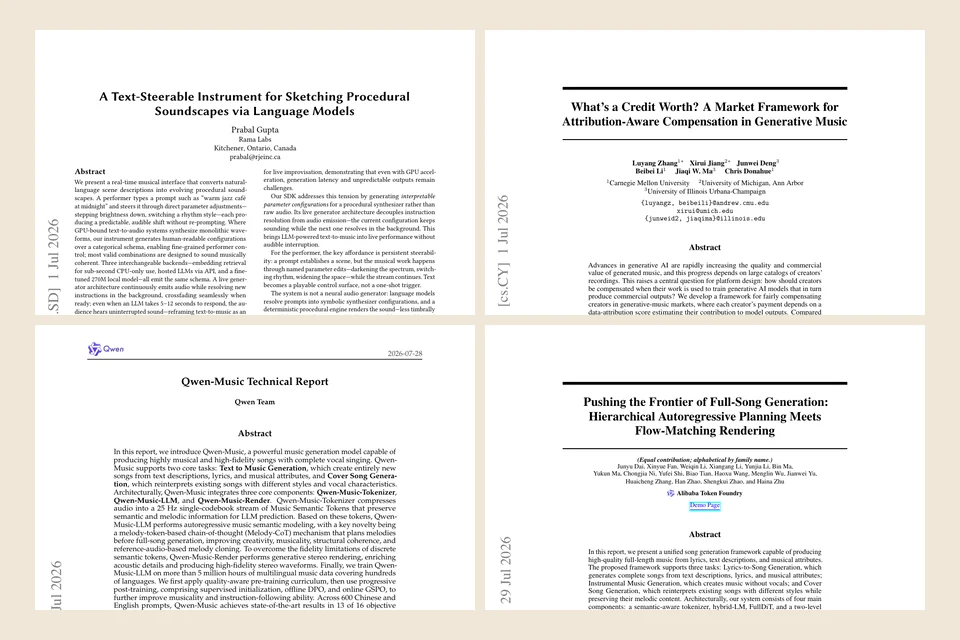
New work explored playable soundscapes, compensation signals, low-data training, structured composition and full-song rendering.
Kyutai's open transcription system separates instruments into MIDI, sheet music and tablature, with code and model weights available under different licences.